

About Us
Founded in 2025, The STARS Program was established with one purpose: to create a supportive and inclusive environment where neurodivergent students can grow and reach their full potential.
We recognize that many neurodivergent students do not receive the individualized support they need in traditional classroom settings, so at The STARS Program, we meet each child where they are, honoring their unique strengths and learning style while providing personalized guidance every step of the way.
By fostering inclusion, and understanding, we help bridge the gap between neurodivergent and neurotypical students. We also work alongside families, equipping parents with the knowledge, resources, and support they need to help their children succeed both in school and beyond.
—
Emotional Intelligence
Developing emotional intelligence helps our students build empathy, communicate more effectively, and form stronger relationships. It also improves conflict resolution skills by encouraging them to listen, remain calm during disagreements, and work toward respectful, constructive solutions. Strengthening emotional intelligence supports personal growth and contributes to success in school and in everyday life.
Classroom Etiqutte
The STARS program empowers students to build a culture of respect by teaching them to use polite language, practice active listening, and communicate with kindness and confidence.
Confidence Building
The STAR program helps build confidence in our students. We encourage participation and incentivize curiosity. Our students will learn to share ideas, ask and answer questions, and engage in classroom activities. Confidence helps students interact positively with classmates, work well in groups, and stand up for themselves respectfully

Many neurodivergent children struggle in environments that are not designed for their learning styles, leading to frustration, exclusion, and missed potential. Traditional classrooms often move quickly, leaving students confused, discouraged, or feeling left behind. At the STARS Program, we meet children where they are at. We believe that every child learns differently—and that those differences deserve understanding, support, and respect. Our afterschool program is built to provide a safe, inclusive, and structured space where students can learn at their own pace while building confidence in their abilities.
The Special Education-to-Prison Pipeline
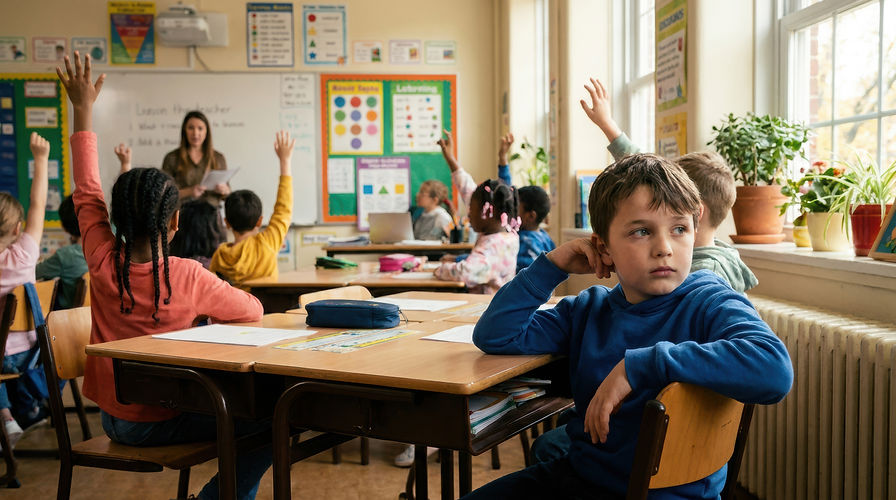
The special education-to-prison pipeline describes a pattern in which students with disabilities, particularly those with behavioral, emotional, developmental, or learning-related needs, are disproportionately disciplined, excluded from educational settings, and placed at greater risk of involvement with the juvenile and criminal justice systems.
How Neurodivergent Students Experience the School-to-Prison Pipeline
1. A student experiences difficulty with emotional regulation.
A student with ADHD becomes overwhelmed, frustrated, or impulsive in the classroom.
2. The behavior is interpreted as defiance or disrespect.
Instead of recognizing a possible unmet need or skill deficit, adults respond primarily with punishment.
3. The student receives repeated disciplinary consequences.
Detention, suspension, isolation, or expulsion become recurring responses.
4. The student becomes disconnected from education.
Academic gaps grow, relationships with teachers deteriorate, and the student may begin to disengage from school.
5. The student becomes increasingly vulnerable to justice-system involvement.
School-based law enforcement referrals, juvenile justice contact, and other risk factors can contribute to further involvement in the justice system.
Students with disabilities represent 12% of the overall school population, yet they make up 25% of all students involved in a school-related arrest, 58% of students placed in seclusion, and 75% of all students physically restrained at school
STARS Support-Based Approach
1. Recognizing the student's needs
Adults understand ADHD-related challenges and recognize difficulties with emotional regulation, impulse control, and executive functioning.
2. Responding with understanding
Teachers identify triggers, listen to the student, and seek to understand the underlying need or skill deficit.
3, Providing individualized support
The student receives appropriate accommodations, positive reinforcement, movement breaks, emotional regulation strategies, and behavioral interventions.
4. Building skills and confidence
The student learns coping strategies, develops self-advocacy skills, strengthens relationships, and experiences success.
5. Strengthening educational engagement
The student remains in the classroom, participates in learning, builds academic skills, and develops a sense of belonging.
6. Promoting positive long-term outcomes
The student has greater opportunities for educational achievement, healthy r relationships, social-emotional development, and reduced risk of justice-system involvement
Want to partner with us?
If you're a school in Orange County, Florida interested in partnering with us, please provide your information